




Have you ever stood under a tree and felt like it was somehow watching you back? You’re not imagining things, at least not entirely. Plants have always lived in that strange space between the everyday and the mysterious.
We eat them, build with them, heal with them, name our towns after them, and call on them in ceremony. In many African traditions, a plant was never just “stuff.” It was part of a living web, tied to soil, water, insects, animals, people, memory, and meaning.
Modern science talks about it differently, but here’s the fun part: it keeps circling back to the same basic truth our ancestors sensed all along. Plants aren’t passive. They sense, react, defend themselves, team up with other living things, and shift their own chemistry when the world around them changes. That doesn’t mean every old story about plants is literally true. But it does mean we owe this knowledge something better than blind faith on one side, or eye-rolling dismissal on the other.
Every Leaf Is Basically a Tiny Chemistry Lab
Scientists have catalogued hundreds of thousands of plant species, and new ones keep turning up. Each one is quietly running its own chemistry experiment, using sunlight, water, carbon dioxide, and minerals to build tissue and cook up compounds that help it survive. Some of those compounds lure in pollinators. Others fend off hungry insects, fight microbes, block UV rays, or make unripe fruit taste awful so animals leave it alone. Phenolics, flavonoids, alkaloids, terpenes: none of this is magic glitter sprinkled on top. It’s survival gear, built in.
Humans have been reverse-engineering this chemistry for centuries. Aspirin traces back to salicylates in willow bark. Quinine came from cinchona. Artemisinin, one of our best weapons against malaria, came from sweet wormwood. Paclitaxel, used to treat cancer, was first pulled from the Pacific yew tree. These are genuine wins, and they deserve respect. But they also demand discipline. A plant can hold a powerful compound and still be dangerous to eat. Dose matters. Preparation matters. Species and plant part matter. Contamination and drug interactions matter. “Natural” was never a synonym for “safe.”
Do Plants Actually Talk to Each Other?
Sort of, yes, if we’re honest about what we mean. Damage a plant and it can release chemicals into the air. Nearby leaves, and sometimes nearby plants, pick up on those signals and beef up their own defenses. Underground, roots release chemicals into the soil while fungal networks and microbes quietly shuttle nutrients and signals back and forth. Plants respond to light, gravity, touch, moisture, temperature, disease, and injury. Some even send electrical pulses through their tissue to coordinate a response.
It’s communication, just without words, without a brain behind it, without intention the way we experience intention. And honestly, that’s already wild enough on its own. We don’t need to dress it up with claims that plants read our minds, judge our character, predict epidemics, or store the psychic memory of everyone who’s ever walked past them. None of that holds up under real, repeatable testing. Those glowing Kirlian photographs people love to share? That’s electrical corona caused by moisture, pressure, and voltage, not a visible soul. And the famous “Backster effect,” the one about plants reacting to human thoughts, fell apart the moment anyone tried to replicate it properly.
Wait, Do Plants Feel Pain?
Plants absolutely notice when they’re hurt. A caterpillar takes a bite, a blade nicks a stem, and the plant’s hormones, chemistry, gene activity, and electrical signaling all shift in response. It might seal the wound, pump out defensive chemicals, or send a warning to nearby tissue. But reacting to injury isn’t the same as feeling pain. Pain, as far as science can tell, needs subjective experience, and that requires a nervous system and something like a brain. Plants have neither. There’s no solid evidence they suffer the way an animal does. We can still treat plants gently, because living things deserve care, just not because science is telling us a cut leaf is screaming.
Sound gets the same treatment. Plants do respond to vibration, including sounds we can hear. Some studies show changes in growth, gene activity, nectar output, or defense under specific lab conditions. It’s a young, interesting field, and most of what we know is still limited to a handful of species in controlled settings. None of that means plants enjoy a playlist, understand spoken words, or respond to chants. Sound is just physical energy moving through matter, the same principle behind those mesmerizing Chladni plate experiments where sand arranges itself into patterns on a vibrating surface. Beautiful, yes. Supernatural, no.
Tradition Is a Map, Not the Final Word
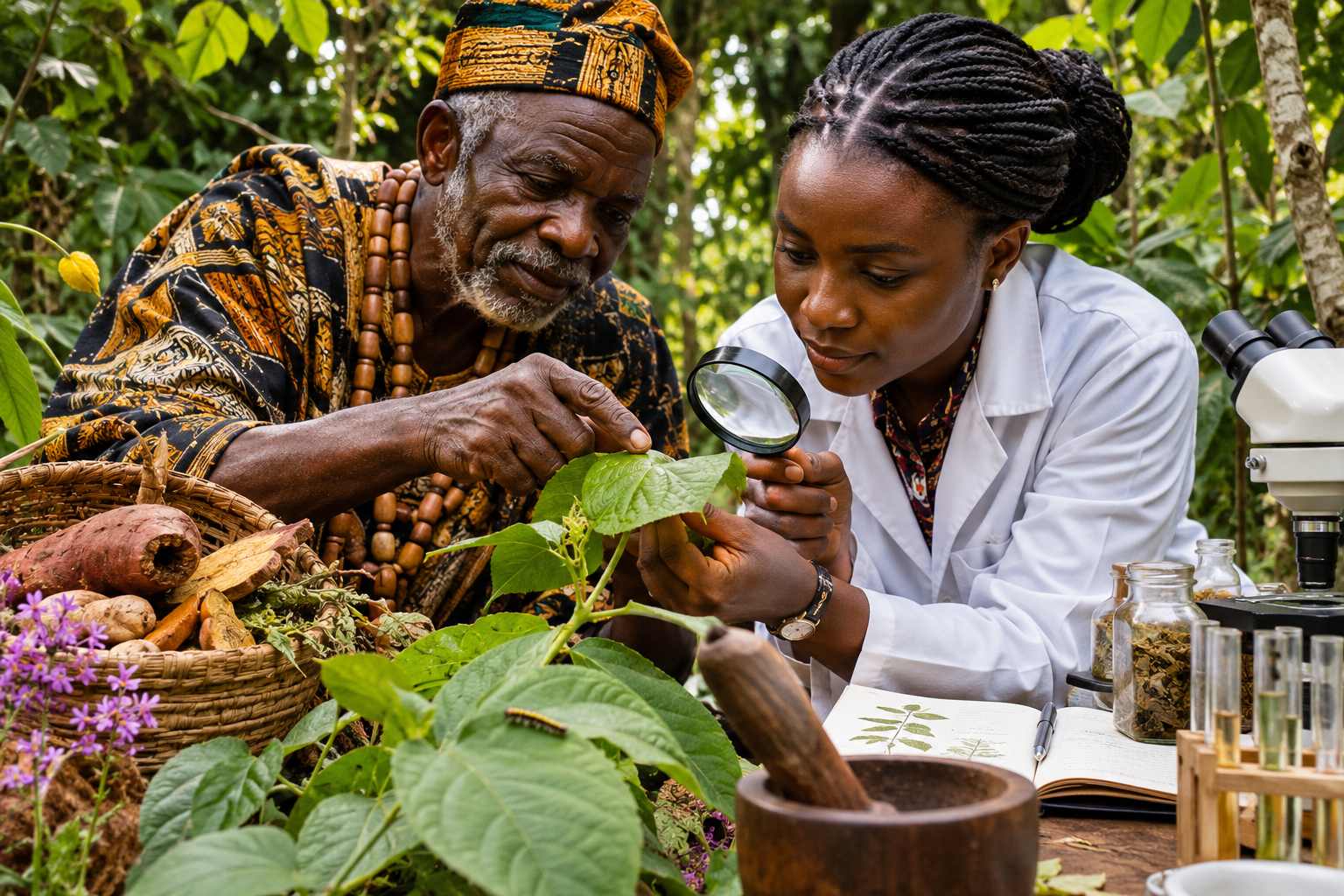
Traditional medicine deserves real study, not polite nodding. It holds generations of careful observation. Healers often knew exactly which part of a plant to use, how to prepare it, and when it seemed to work. That kind of knowledge is a fantastic starting point for science, and fields like ethnobotany have repeatedly shown that local knowledge points researchers toward genuinely active compounds. But a map gets you to the trailhead, it doesn’t guarantee the summit. A remedy only earns real trust once its identity, dose, benefits, risks, and interactions have been properly tested.
This matters most when the stakes are high. No plant should ever be sold as a guaranteed cure for cancer, fibroids, infertility, psychosis, difficult childbirth, or snakebite without strong clinical proof behind it. Someone bitten by a venomous snake needs real antivenom and urgent medical care, not leaves to chew while the clock runs out. A woman in obstructed labor needs a skilled medical team, not folk remedies and hope. Respecting culture should never mean gambling with someone’s life.
Plants like Jatropha, Hypoestes verticillaris, Uraria picta, Senna tora, Garcinia kola, and Newbouldia laevis all carry long histories of traditional use, and they’re worth studying seriously. A promising result in a lab dish or an animal trial is not the same as proof it’s safe and effective in people. Even naming these plants correctly can trip people up, since common names shift from village to village and lookalike species can carry very different, sometimes toxic, chemistry. The right attitude isn’t “our ancestors knew nothing” and it isn’t “our ancestors couldn’t have been wrong” either. It’s simpler than that: preserve the observation, test the claim, protect the patient.
The Myth of the “Right Time” to Harvest
Some traditional healers swear by harvesting at exact hours, roots at night, bark at dusk, leaves at noon. There’s real science hiding in that instinct. Plant chemistry genuinely shifts with light, temperature, rainfall, season, age, stress, and the plant’s own internal clock. Certain compounds really do rise and fall through the day or across a growing season. But there’s no single rule that applies to every plant on earth. The best harvest time depends on the species and the exact compound you’re after. What started as sharp observation can calcify into rigid ritual once one local pattern gets treated as a universal law.
The old “doctrine of signatures” deserves the same gentle skepticism. It claimed a plant’s shape, color, or habitat hinted at what it could heal: a heart-shaped leaf for heart trouble, a kidney-shaped bean for kidney health. Sometimes that kind of pattern-spotting led somewhere useful. But resemblance isn’t evidence. A heart-shaped leaf isn’t automatically heart medicine, and a plant growing in water isn’t automatically safe to eat or good for your kidneys. Plenty of poisonous plants love water too. A clue is where discovery begins, not where it ends.
What’s Actually Worth Keeping
The real treasure in traditional plant knowledge might be its obsession with relationship. A plant never grows in isolation. Its condition tells a story about the soil, water, climate, microbes, insects, grazing animals, fire history, and human activity around it. Certain plants signal disturbed ground, heavy metals, salty soil, shifting moisture, or changing rainfall. Tree rings hold a record of past climate and disruption. Flowering and leafing times track seasonal change. In that very real sense, plants do speak, just through form, chemistry, timing, and where they choose to grow. We just have to learn how to listen.
African knowledge systems also remind us that healing was never only about matching a chemical to a symptom. It involves trust, community, meaning, diet, rest, environment, and the dignity of the person being treated. Modern medicine sometimes forgets those pieces. Traditional practice sometimes forgets measurement, dosage, and proof. We don’t have to pick a side like we’re choosing a team. We can hold onto cultural memory while still demanding evidence. We can honor a sacred tree without inventing a medical claim about it. We can study a healer’s remedy with genuine respect, without mocking the language the knowledge traveled in.
A Little Humility Goes a Long Way
The world of plants is richer than our ancestors could measure, and stranger than modern science has fully explained. That calls for humility on every side of the conversation. Believers need to be ready to let go of a cherished claim when the evidence just isn’t there. Skeptics need to be willing to actually investigate before writing off unfamiliar knowledge as superstition. Science, at its best, isn’t the enemy of wonder. It’s wonder with discipline: the patience to watch closely, the nerve to test an idea, and the honesty to change your mind when you’re wrong.
Plants don’t need made-up magical powers to earn our respect. They already feed us, regulate entire ecosystems, shape our climate, shelter countless other species, and hand us molecules that become life-saving medicine. They notice the world and respond to it constantly, quietly, without any fanfare. That quiet power is real. Our job is simply to describe it honestly, use it responsibly, and pass down both the wisdom of tradition and the rigor of evidence to whoever comes next.