




How Plants Fight, Signal, Adapt, and Quietly Run the World Without Ever Taking a Step
Plants don’t get enough credit. They just stand there, right? No muscles, no nervous system, no road trips. But watch closely and you’ll see something wild: every leaf is running a 24/7 operation, soaking up light, reading the weather, patching wounds, striking deals with microbes, and rewriting its own chemistry on the fly. No brain required. No intention needed. Just a few hundred million years of evolution teaching one organism how to survive without ever leaving home.
The chemistry of staying alive
It all starts with photosynthesis, the original hustle. Plants grab sunlight, pull in carbon dioxide and water, and cook up energy-rich sugars, releasing oxygen as the exhaust. Those sugars become everything: cellulose, proteins, fats, pigments, hormones, vitamins, enzymes, the whole toolkit for growing and reproducing. Every animal on Earth, humans included, is living off this one invention. Even a steak dinner is just sunlight, a few steps removed.
Biologists split plant chemistry into two camps: primary metabolism, the basic stuff that keeps a plant alive and growing, and specialized (or secondary) metabolism, the custom-built arsenal for specific problems. Hungry insects. Browsing deer. Disease. Too much sun. Not enough water. Nosy neighbors competing for the same patch of soil. Pollinators that need convincing. Scientists have catalogued an almost absurd number of these specialized compounds, and we’re still only scratching the surface.
None of this means every animal is out there munching leaves, or that predators are secretly hunting for salad inside their prey. Food webs are messier than that. Carnivores eat herbivores, other carnivores, carrion, whatever the opportunity allows. Humans are flexible eaters too, and what ends up on our plates depends on culture, access, health, ethics, and plain old preference. A well-planned vegetarian or vegan diet can absolutely support good health, it just takes some attention to nutrients like B12, iron, calcium, iodine, omega-3s, protein, and vitamin D. Here’s the simple truth: plant productivity feeds nearly every diet on the planet, even the ones built around meat. What you choose to eat is a more personal question than any slogan can answer.
Defense without escape
A plant can’t run from a threat, so it builds its defenses straight into its body. Thorns, spines, prickles, tough leaves, hairy stems, thick bark, waxy coatings, all of it makes a meal harder to get. Then there’s the chemistry. Tannins bind up proteins and make leaves harder to digest. Saponins can rupture cell membranes. Alkaloids mess with the nervous system or other core biological functions, nicotine being the one most of us know by name. Poison hemlock goes further still, packing coniine and related alkaloids strong enough to cause paralysis and death.
Here’s the twist: none of these compounds are simply good or bad. It all comes down to the molecule, the dose, how it enters the body, and who’s on the receiving end. A chemical built to repel an insect can, once isolated and carefully measured, become a lifesaving drug. Quinine came from Cinchona bark and turned into one of history’s great antimalarial treatments. Salicin from willow bark helped inspire aspirin, though modern aspirin is a lot more refined than chewing on a twig. The takeaway isn’t that every bitter leaf is secretly medicine. It’s that plant chemistry is powerful enough to heal, to harm, or sometimes both at once.
Plants also adjust their defenses after they’ve been attacked. Damage a leaf, and the plant may ramp up its defensive chemistry right there and in other parts of the body, all coordinated through internal signals like jasmonates and other plant hormones. Repeated feeding can even make a plant less appetizing over time. This doesn’t look the same across every species, and no, it isn’t proof that a plant feels pain the way an animal does. But it is clear evidence that plants notice damage and respond to it, fast.
Signals in the air
One of the strangest, most fascinating discoveries in plant science: plants talk, sort of, through the air. When a leaf gets cut, chewed, or infected, it can release airborne chemicals. Nearby leaves, and sometimes entire neighboring plants, pick up on these signals and start ramping up their own defenses. Popular science loves to call this plants warning each other, and that’s a fun way to think about it, as long as we’re careful. The chemicals are real. The responses are measurable. But there’s no conversation happening here in any human sense. A signal can help the plant next door without ever having evolved as a deliberate message.
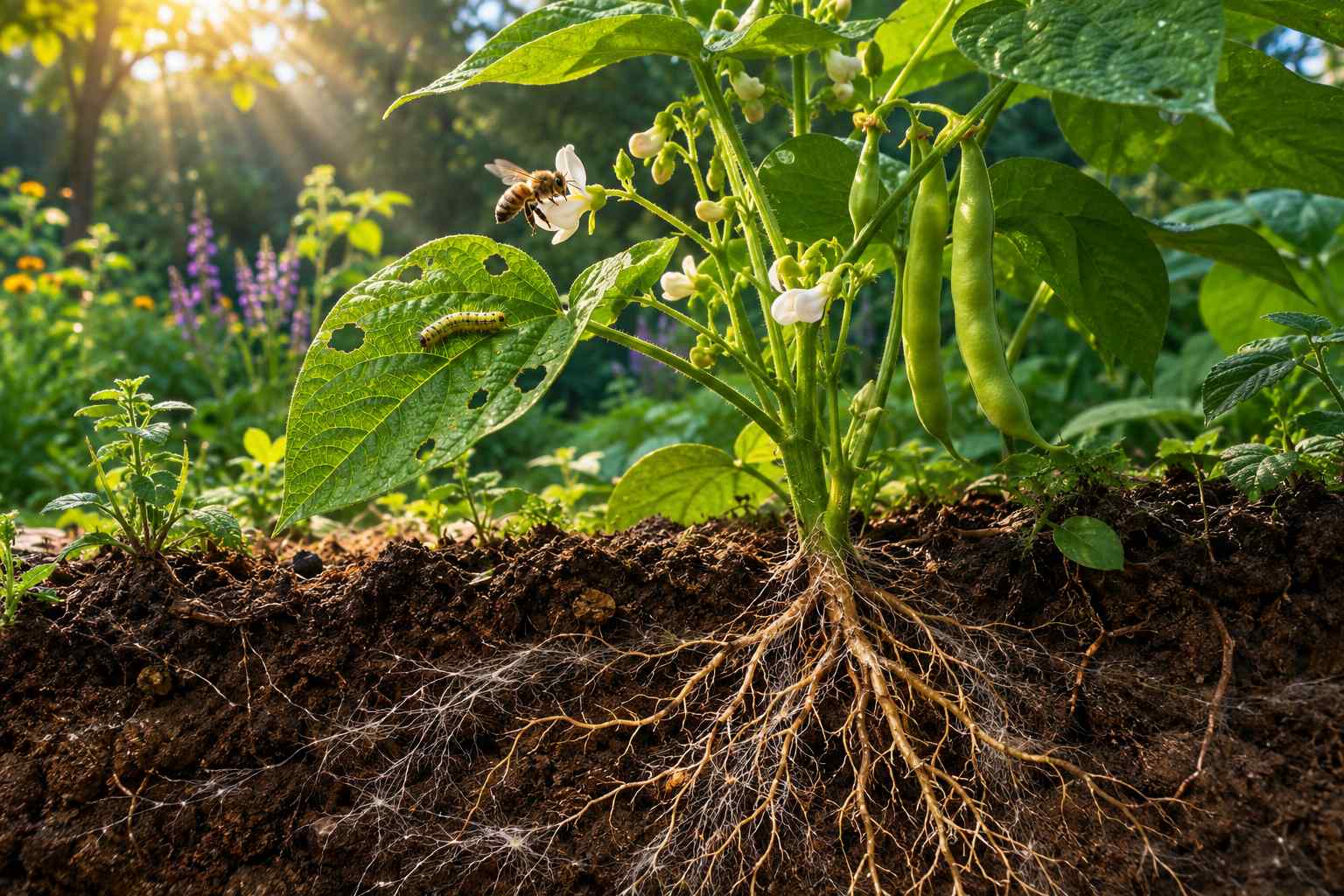
These airborne cues can do more than warn, they can call for backup. When caterpillars or mites start chewing on certain plants, the changing scent can attract the very predators or parasitoids that hunt those pests. Researchers have seen this play out with lima beans and other species: damaged plants release an odor, and natural enemies of the attacker show up. It’s a three-way relationship, plant, herbivore, predator, and it’s a good reminder that no plant is really working alone. Its survival depends on an entire web of relationships, both above ground and below.
Competition and cooperation below ground
Underground, it’s a competition for light, water, space, and nutrients, and plants play rough. Some release chemicals that mess with the germination or growth of their neighbors, a trick called allelopathy. Black walnut trees are the classic example, producing juglone, a compound linked to poor growth in sensitive nearby plants. But the old claim that nothing can grow near a walnut tree? Too dramatic. The real effect depends on the species involved, soil conditions, drainage, microbial activity, and how much plant material is actually present. Ecology rarely sticks to the neat version of the story.
Competition is only half the underground story. Roots also team up with mycorrhizal fungi, trading carbon for better access to phosphorus and water. They partner with bacteria too, including the kind that help legumes pull usable nitrogen straight out of the air. None of this is an act of generosity; it’s a transaction, shaped by costs, benefits, and whatever the environment allows. But it’s a good reminder that the single plant standing above the soil is really just the visible tip of a much bigger, busier partnership.
Ripening, fragrance, and persuasion
A fruit was never really made for you. It’s a plant’s reproductive strategy, dressed up to look like a gift. Before the seeds are ready, most fruit is hard, sour, bitter, green, basically unappealing on purpose. Then ripening kicks in: starches turn to sugars, acids fade, cell walls soften, pigments shift, and volatile compounds create those unmistakable smells. All of it is timed to attract animals right when eating the fruit is most likely to spread viable seeds. Some seeds get carried off and dropped. Others take a trip through an animal’s gut and come out the other end with a free dose of fertilizer.
Flowers run their own version of persuasion. Color, shape, scent, nectar, timing, all of it calibrated to match up with bees, moths, bats, birds, beetles, whoever’s doing the pollinating. There’s nothing sentimental about it. It’s a trade: the pollinator gets a meal, the plant gets its pollen moved. Sometimes the arrangement is beautifully specialized, sometimes it’s sloppy and easily disrupted, but it’s one of the central deals that keeps ecosystems, and a huge share of agriculture, running.
Medicine without mythology
Plant chemistry deserves real respect, but respect isn’t the same thing as hype. Flavonoids, tannins, terpenes, and other phytochemicals are genuinely being studied for antioxidant, anti-inflammatory, antimicrobial, and other effects. That doesn’t mean an unripe fruit, a boiled peel, or a random herbal mix cures cancer, diabetes, high blood pressure, or infection. Something working in a lab dish doesn’t automatically make it a safe treatment. Concentration, absorption, how the body processes it, interactions with other substances, and actual clinical evidence all matter enormously. “Natural” tells you where something came from. It tells you nothing about whether it’s safe or effective.
The same caution goes for plants we think we already know. Green or sprouting potatoes can build up glycoalkaloids like solanine and chaconine, which can cause serious poisoning, not exactly a home remedy for an upset stomach. Aloe gel works well on skin for some conditions, but the evidence varies, and aloe latex taken by mouth can actually be harmful. Herbal products can swing wildly in strength or interact badly with prescription medicine. Traditional knowledge can absolutely point researchers toward something real, but turning that into a safe treatment takes accurate identification, careful preparation, correct dosing, and solid clinical evidence.
A more mature wonder
You don’t need to turn a plant into a tiny person to find its life astonishing. The real story is better than the myth. Rooted in one spot for life, a plant still manages to turn light and air into living tissue, build its own defenses, patch itself up, rewrite its chemistry, call in allies, outcompete rivals, strike deals with microbes, and time its flowers and fruit to the rhythms of other species. Plants aren’t passive decorations, and they’re not benevolent pharmacies put here for our convenience. They’re organisms fighting for survival on their own terms, and doing it brilliantly.
Look closely enough, and you’ll see that stillness was never the same thing as doing nothing, and silence was never the same thing as simplicity. The green world around us is in constant motion: trading energy, chemicals, information, risk, and opportunity, every single day. Real science doesn’t shrink that hidden life by stripping away the easy claims. It makes it bigger, because what survives careful scrutiny isn’t less mysterious, it’s more precise, more connected, and more alive. Ask for evidence. Tell the difference between what’s possible and what’s proven. Resist both the urge to dismiss plants as boring and the urge to turn them into magic. The truth doesn’t need either one. The real, tested facts about plants are already extraordinary enough.